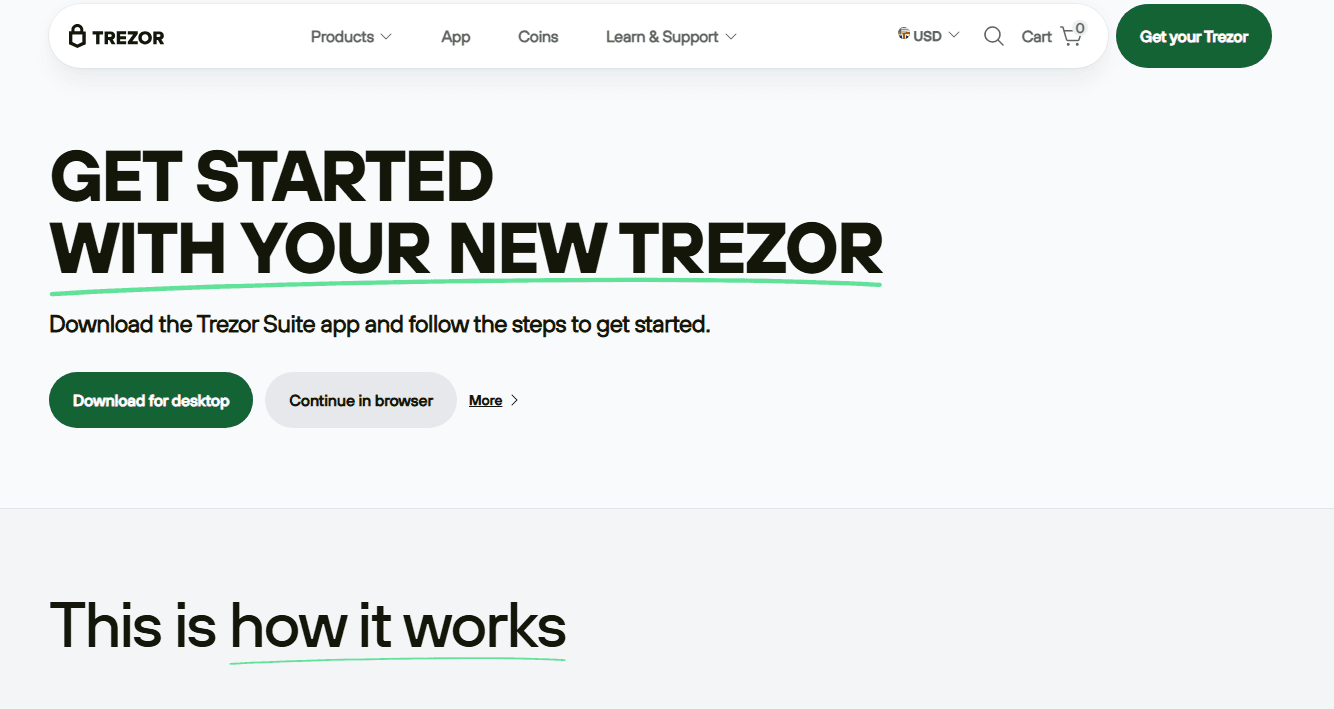
Trezor Suite: Comprehensive Guide to Securely Managing Your Cryptocurrency
Trezor Suite is the official software application designed to work seamlessly with Trezor hardware wallets. It provides a secure, user-friendly environment for managing cryptocurrency assets while keeping private keys offline. With Trezor Suite, users can monitor balances, manage multiple accounts, send and receive funds, and verify transactions safely.
This guide offers an in-depth overview of Trezor Suite, including setup, features, account management, transaction handling, security protocols, troubleshooting, and best practices to ensure long-term security for your cryptocurrency holdings.
Understanding Trezor Suite
Trezor Suite serves as the bridge between your Trezor hardware wallet and your digital assets. Unlike traditional software wallets, Trezor Suite never exposes private keys to connected devices or the internet. Instead, it acts as a secure interface, allowing users to perform operations while the keys remain safely stored on the hardware device.
The suite is available for desktop and mobile platforms, providing a consistent, secure, and intuitive experience for cryptocurrency management.
Why Trezor Suite Is Essential
Trezor Suite is central to safe cryptocurrency management because it:
Protects Private Keys: Keys never leave the hardware wallet.
Simplifies Portfolio Management: Users can manage multiple accounts and track balances efficiently.
Enhances Security: Every transaction requires confirmation on the hardware device.
Supports Multiple Cryptocurrencies: Users can manage a variety of coins from one interface.
By using Trezor Suite, cryptocurrency owners can confidently manage their assets without sacrificing security for convenience.
Setting Up Trezor Suite
Setting up Trezor Suite is straightforward and begins with downloading the application on a computer or mobile device. After installation, users connect their Trezor hardware wallet and authenticate the device.
Steps include:
Connect the Hardware Wallet: Plug into a computer or connect via a supported mobile interface.
Authenticate the Device: Verify the device is genuine and untampered.
Enter PIN: Unlock the wallet using the PIN set during initial configuration.
Initialize Accounts: Import existing accounts or create new ones within the suite.
Following these steps ensures secure operation and proper synchronization between the suite and the hardware device.
Navigating the Trezor Suite Interface
Trezor Suite is designed to provide clarity, security, and ease of use. The main components include:
Dashboard: Shows account balances, portfolio overview, and recent transactions.
Accounts Section: Displays all cryptocurrency accounts linked to the device, allowing users to manage each separately.
Send/Receive Panel: Facilitates secure transactions and address generation.
Settings: Allows device configuration, firmware updates, and security management.
The interface is intuitive yet secure, guiding users through operations while ensuring that sensitive information remains protected.
Adding and Managing Accounts
Trezor Suite allows users to add multiple cryptocurrency accounts. Each account corresponds to a blockchain and is derived from private keys securely stored on the hardware wallet.
To manage accounts:
Select the cryptocurrency to add.
Verify account details on the Trezor device.
Monitor balances, transaction history, and portfolio performance.
Accounts can be managed without exposing private keys, maintaining security for all assets.
Sending and Receiving Cryptocurrency
Trezor Suite facilitates both sending and receiving cryptocurrency safely:
Receiving Funds: Users generate a public address within the suite and confirm it on the hardware wallet. This prevents malware from altering addresses.
Sending Funds: Enter recipient information and transaction details in the suite. The Trezor device displays the information for confirmation before broadcasting the transaction.
This verification process ensures all transactions are secure and authorized by the wallet owner.
Security Features of Trezor Suite
Trezor Suite integrates multiple security layers to protect digital assets:
Hardware Verification: Transactions must be confirmed on the Trezor device.
PIN Protection: Prevents unauthorized access even if the device is obtained physically.
Recovery Seed Backup: Enables account recovery if the device is lost or damaged.
Firmware Updates: Regular updates address vulnerabilities and improve security.
Offline Key Storage: Private keys remain offline, reducing exposure to malware and online attacks.
These features make Trezor Suite a secure and reliable tool for cryptocurrency management.
Backup and Recovery
Trezor Suite emphasizes secure backup through the recovery seed. The seed is generated during wallet setup and is essential for restoring access to accounts in case of device loss, theft, or damage.
Store the recovery seed offline in a secure location.
Never share the seed digitally or store it online.
Use the seed to recover wallets and accounts on a new device.
Proper backup and recovery practices are vital for long-term asset protection.
Updating Trezor Suite and Firmware
Regular updates are essential to maintain security and functionality. Updates provide:
Protection against vulnerabilities.
New features and enhanced user experience.
Compatibility with newly supported cryptocurrencies.
Users receive prompts when updates are available. Installation requires device confirmation, ensuring security throughout the process.
Multi-Device Access
Trezor Suite supports access across multiple platforms, including desktops and mobile devices. The login process remains consistent:
Connect the hardware wallet.
Authenticate the device and enter the PIN.
Confirm all transactions on the Trezor device.
This approach ensures secure, uniform access regardless of platform.
Best Practices for Using Trezor Suite
To maximize security when using Trezor Suite:
Verify addresses on the hardware device before sending or receiving funds.
Keep the PIN confidential and avoid digital storage.
Store recovery seeds offline in a secure location.
Avoid public networks when managing funds.
Regularly update the Trezor firmware and software.
Following these practices ensures safe and effective wallet management.
Common Issues and Troubleshooting
While Trezor Suite is reliable, users may encounter issues:
Device not recognized: Check connections, restart the suite, or update firmware.
Delayed transactions: Verify network settings and blockchain support.
Software errors: Restart the application or reconnect the device.
Understanding these common issues helps maintain smooth operation.
Benefits of Trezor Suite
Trezor Suite offers numerous advantages:
Enhanced security through hardware-based verification.
Intuitive interface for managing accounts and transactions.
Cross-platform accessibility with consistent security measures.
Portfolio tracking and monitoring for multiple cryptocurrencies.
Offline storage of private keys, reducing exposure to digital threats.
These benefits make Trezor Suite a reliable and indispensable tool for cryptocurrency users.
Conclusion
Trezor Suite is a powerful, secure, and user-friendly application for managing Trezor hardware wallets. It enables users to manage multiple accounts, send and receive cryptocurrency safely, monitor portfolios, and maintain robust security measures.
By understanding the suite’s features, following best practices, and properly handling backups and firmware updates, users can ensure long-term protection of their digital assets. Trezor Suite is not only a management tool but also a critical component for secure and effective cryptocurrency ownership.